
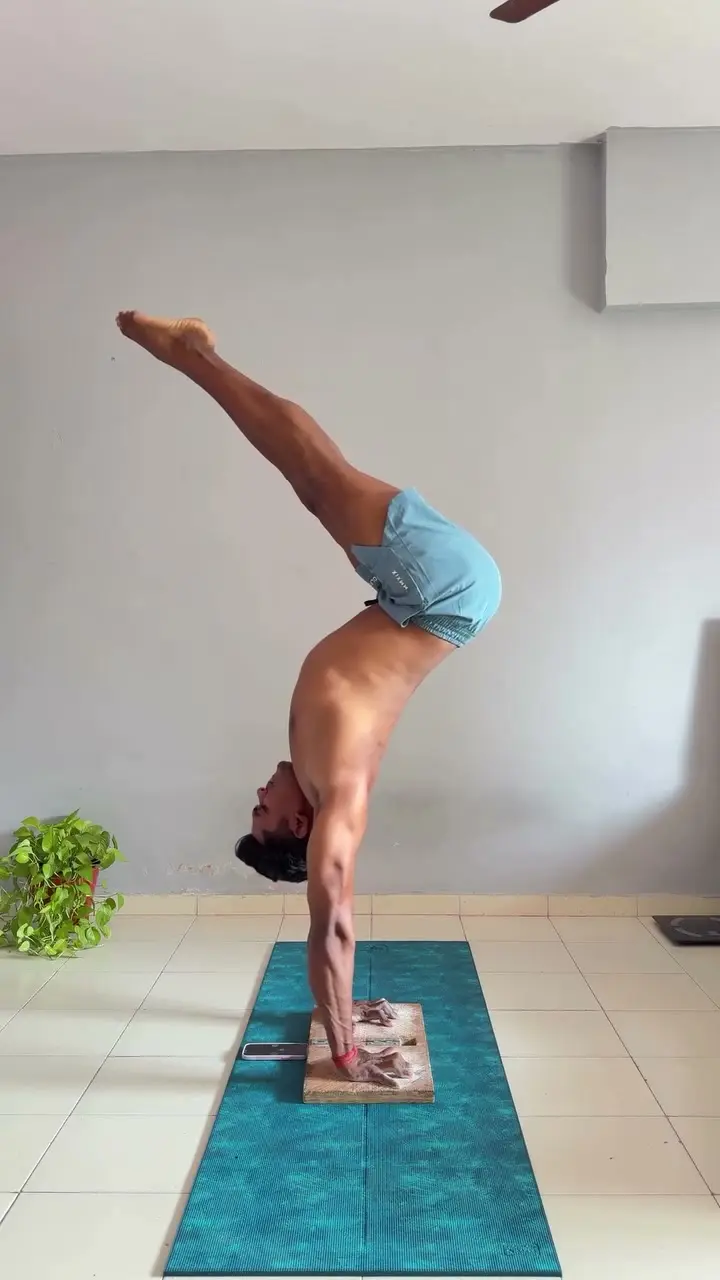
If you are serious about acquiring a new physical skill, one occasional session is rarely enough to create a reliable learning rhythm.
Manoj's preference is direct: a minimum of two sessions per week, with three being ideal for many students. Depending on their goals, some clients work with him five times weekly.
That is not a promise that a certain number of sessions produces a handstand by a certain date. Frequency is only one part of progress. It does, however, affect how often you can experience the movement, apply feedback, and return before the lesson becomes unfamiliar again.
Why once a week often feels like starting over
Handstands combine physical capacity with coordination.
You may need to develop wrist tolerance, shoulder support, body-line awareness, entry control, balance reactions, and confidence while upside down. These qualities do not all change at the same speed.
With long gaps between sessions, much of the next practice can be spent remembering:
- How the setup felt.
- How much force to use in the kick-up.
- Where the balance point appeared.
- Which correction helped last time.
- How to exit without panic.
Twice-weekly exposure gives the previous lesson a better chance to remain usable.
Why three sessions can be ideal
Three weekly sessions can create a productive cycle:
- Practise the current focus.
- Review what worked and make a correction.
- Repeat the corrected version before the week ends.
The sessions do not have to be identical. One may emphasize technique, another supporting strength and mobility, and another controlled practice of the complete skill.
More sessions should not mean repeating exhausted attempts.
Quality still matters more than collecting attempts
Doing hundreds of careless kick-ups is not automatically better than doing fewer, well-observed attempts.
A useful session has a purpose. For example:
- Enter with less force.
- Keep the shoulders active.
- Practise a safe exit.
- Improve consistency at the wall.
- Recognize the balance point.
- Maintain a specific shape.
If technique has deteriorated and the body is no longer responding well, adding attempts may only rehearse the wrong solution.
Your weekly frequency should fit your body
Two or three sessions are not the same prescription for every student.
A complete beginner may need short exposures that gradually build confidence and tolerance. An experienced strength athlete may tolerate more total work but still need to learn precision. An advanced hand balancer may use higher frequency with carefully managed intensity.
Your broader training matters too. Heavy pressing, CrossFit, bodybuilding, gymnastics, climbing, or another demanding activity can change how much wrist and shoulder work fits into the week.
Programming should account for the whole person, not only the handstand goal.
Consistency does not mean ignoring pain
“Keep practising” does not mean “push through everything.”
If a session produces pinching, impingement, or pain, tell your coach. Wrist, elbow, shoulder, migraine, injury, and other medical concerns may require a change in training or guidance from an appropriate professional.
Consistency is valuable when the work is sustainable.
A practical starting rhythm
For many healthy beginners, two focused weekly sessions provide a realistic starting structure. A third shorter practice may be added if recovery, technique and scheduling support it.
Each practice should have:
- A defined objective.
- An appropriate warm-up.
- A manageable number of quality attempts.
- Supporting work chosen for your limitation.
- Notes or video that help guide the next session.
The exact structure belongs to the individual.
The best schedule is one you can repeat and refine
Handstand progress rarely comes from one heroic workout. It comes from returning often enough to remember, adjust and build.
If you want help choosing an appropriate training frequency, send Manoj your current level, weekly training schedule and goal on WhatsApp.